
Okay, so check this out—I’ve been poking around Solana explorers for years. Wow! The first thing you notice is speed. Solana moves fast. Really fast. My gut said a good explorer would be snappy and simple. Initially I thought a flashy UI was the thing, but then realized that latency and data accuracy matter way more when you’re chasing airdrops or tracing a rug-pull. Hmm… somethin’ about seeing a tx confirm in real-time just settles you.
Here’s the thing. Token tracking is not just about balance readouts. It’s about provenance, spikes, tokenomics quirks, and the stories buried in logs. Whoa! You want clear token metadata, mint authority history, whale movements, and a clean token holders list. Medium-level analytics help. And then occasionally you want deep dives—log parsing, decoded instructions, and maybe a CSV export because Excel is still king for some of us (ugh, I know).
I’ll be honest—I have favorites. Some explorers feel like an academic paper: dense, accurate, but dry. Others look slick and pretty, but they hide useful data behind menus. My instinct said “give me both,” though actually, wait—let me rephrase that: give me a fast interface that surfaces raw data fast, with optional deep tools for power users. On one hand a casual trader needs a quick token snapshot. On the other hand, a forensic investigator needs decoded inner workings. Balancing both is tough, and that balance is where a solid token tracker shines.
A practical run-through: what I look for when tracking tokens
First: canonical token page with mint info and supply breakdown. Second: holder distribution with percentiles and labels if any are known. Third: transfer history with decoded instructions, timestamps, and fee transparency. Fourth: tools—export CSV, copy mint address, jump to transaction with a single click. Hmm… seriously, tiny quality-of-life things matter most in frantic moments.
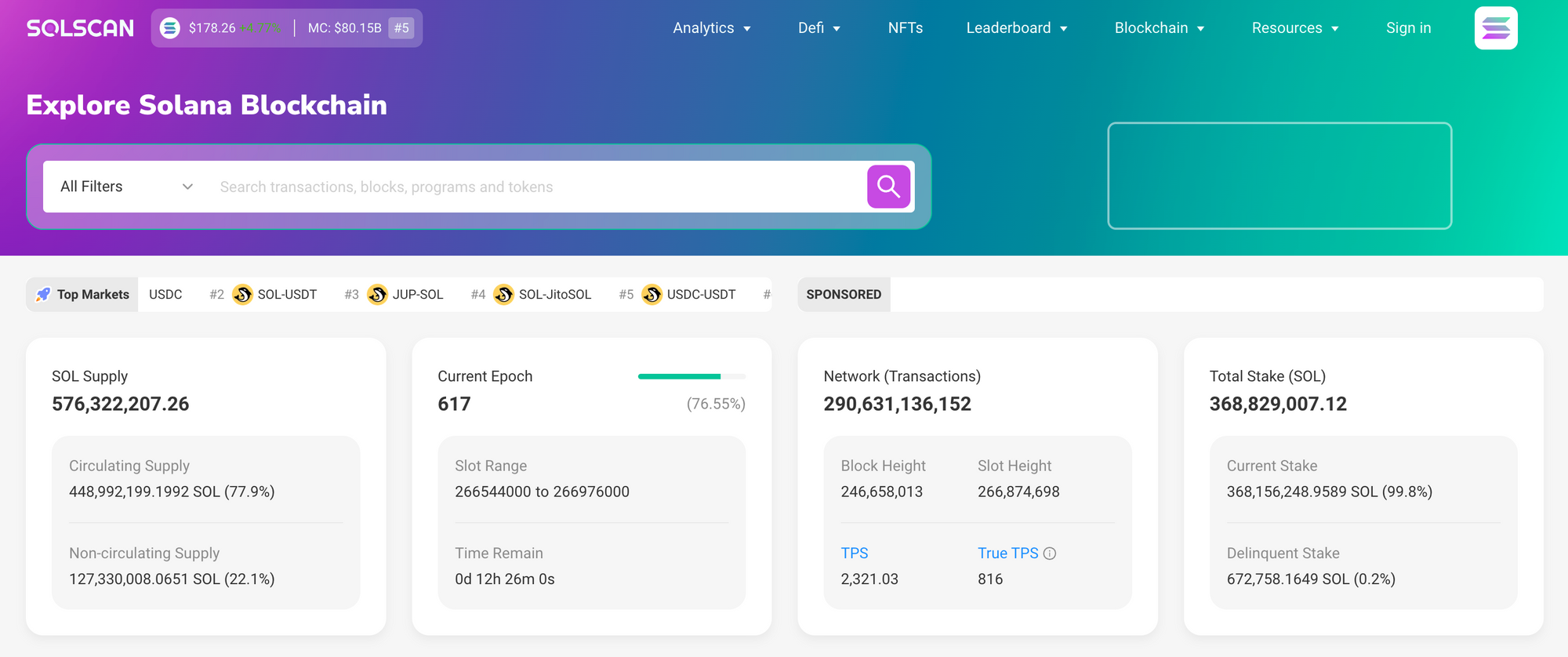
On that note, I’ve used a bunch of apps. Some explorers are great for block browsing but clumsy for token pages. Solscan gets this right more often than not. I’m biased, but that’s because they combine a tidy token roster, quick decoding, and a straightforward holders view. When I clicked through, things loaded fast—no waiting around while a spinner mocked me. That matters in NYC commute situations, or when you’re multi-tasking during market volatility… (oh, and by the way, their token pages let you inspect mint authority changes without hunting through raw logs.)
At the same time, there are trade-offs. No explorer is perfect. One will excel at UX, another at raw data fidelity. On one hand you want everything human-readable; on the other hand you can’t lose the raw transaction trace. Some explorers drop a decoded instruction that looks pretty but strips nuance. That’s when I open a raw log and cross-check.
Why speed and accuracy beat bells and whistles
Short wins: speed reduces mistakes. Medium thought: when markets move, you need a clear token ledger to see where liquidity lives. Long view: if you can’t quickly determine whether a mint authority rotated, or whether a wallet holds an outsized supply that could dump, you’ll make bad calls—especially when algorithms and bots are reacting in milliseconds, and humans are very very slow by comparison.
Also—transparency. Tools that surface token metadata, on-chain verified metadata (or lack thereof), and token program instruction decoding make for better decisions. Initially I thought that token verification badges would always be consistent. But then realized each explorer handles verification differently. On reflection, verification should be a helpful hint, not a guarantee. Hmm… that part bugs me, because users sometimes treat badges like a safety net when they aren’t.
Pro tip: always cross-reference the mint address. Names can be spoofed. Copy the mint to clipboard and paste into a trusted token page. Seriously—copy-paste beats eyeballing every time.
How explorers help with real problems
Case: you spot an incoming airdrop token. Quick checklist—who minted it? Who’s the current owner? Is there an active freeze authority? Wow! If a token has a retained supply under a multisig or a timelock, that changes the risk profile. Some explorers flag those relationships. Other times you have to dig through the token’s tx history, identify the initial mint tx, then trace policies. It’s doable, but the faster the tool surfaces the key facts, the faster you can act.
Another case: suspect rug. You see a massive transfer from the project wallet to an exchange address. Medium answer: check holder concentration and recent transfers. Long thought: correlate with on-chain swap events and liquidity pool movements. If a whale drains LP and then the project’s treasury sells, that’s a red line. That kind of forensics is part data science, part detective work—so a token tracker that shows holder change over time, linked txs, and quick jumps to pool accounts is invaluable.
Okay—small tangent: sometimes explorers offer historical charts. Some are basic, some are advanced. I like charts, but I don’t trust them without the underlying tx-level proof. Charts can smooth over nuance. They show trends but not the who and why. So I usually use charts to guide me and transactions to confirm.
What to watch for when choosing an explorer
Data completeness. Medium: gaps in indexers can mislead you. Long: if an explorer lags indexing, or if it doesn’t capture certain program-specific events (say custom token programs), then you’re missing pieces of the puzzle and making decisions on partial data. That’s a recipe for errors.
Reliability and uptime. Wow! Uptime matters. During high congestion, a slow or down explorer is worse than one with fewer features. Support and community trust. Huh—this is intangible but important. If an explorer is responsive to bug reports and transparent about indexer issues, that’s a big plus.
Finally: tooling for power users. CSV export, API, decoded logs, and label databases help. Seriously, an API can be the difference between manual work and automated detection systems that alert you to suspicious holder shifts.
If you’re evaluating explorers, bookmark one that feels right and stick with it for cross-checks. My instinct says three things: speed, transparency, and exportability. On the strength of that, I often point folks to reliable, well-rounded tools like the solscan explorer official site because they combine those elements in a usable package.
FAQ
How do I verify a token is legitimate?
Check the mint address, look for verified metadata or known project links, inspect mint authority changes, review holder concentration, and trace recent large transfers. If unsure, cross-check with multiple explorers and community channels. I’m not 100% sure any single check is definitive, but combined signals will help.
What if the explorer shows conflicting data?
First, refresh and re-index if the explorer offers that option. Then cross-check raw transaction logs. If it still conflicts, reach out to the explorer team and consult a secondary source. Sometimes indexers lag or drop program-specific events, so redundancy is key.
