
Okay, so check this out—I’ve been poking around browser wallets for years. Wow! Some are clunky, some are flashy, and a few are honestly genius. My instinct said something felt off about the status quo. Initially I thought the right wallet was just about UX, but then I noticed security habits matter way more than I expected, and that changed things for me.
Here’s the thing. Browser extension wallets sit in a weird spot: they’re super convenient, yet they live in your same browser where phishing, malicious sites, and shady extensions roam. Seriously? Yep. On one hand the convenience of clicking a button to sign a transaction is magical. On the other hand, though actually, that magic can be a liability if the wallet doesn’t defend assumptions that users don’t even know they should have.
When I first installed a new wallet (full disclosure: I’m biased toward tools that feel developer-friendly), I was relieved by the clear UI. Whoa! The onboarding was clean. But then I dug deeper—permissions, RPC behavior, how it isolates accounts—and found gaps. My working assumption had been “more features equal better,” but that was naive. Actually, wait—let me rephrase that: many features are great only if they don’t expand the attack surface in subtle ways.
So I started treating a wallet like a networked device in my home: not just pretty, but resilient. Hmm… that meant thinking in layers. Authentication, sandboxing, transaction previews, gas transparency, and the ability to manage approvals per dApp—each needed scrutiny. Something about the way a wallet stored approvals bugged me; too many dApps get indefinite access. That part bugs me. Very very important, you know?
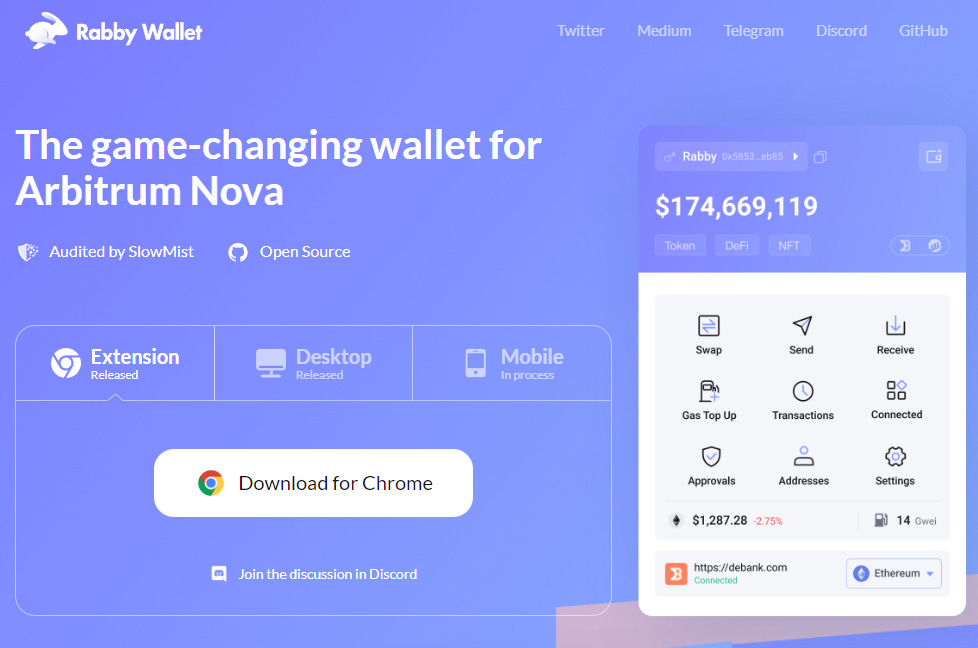
What actually made me try rabby
My first impression of rabby was simple: it felt like an engineer built it for other engineers, but with enough polish that non-technical folks could survive. Whoa! The little details jumped out. The transaction confirmation screen showed what changed, not just a blob of hex. Really? Yes. My instinct said “this could cut a lot of accidental approvals,” and I kept poking at it.
I experimented with it across chains, and I liked that it treated approvals like first-class objects. Initially I thought approvals were fine as-is, but then I realized managing them granularly reduced exposure a lot. On one site I revoked a token approval in a minute. That tiny action could have prevented a real exploit down the road. I’m not 100% sure every user will do that, but the wallet made it easy enough to matter.
Now, I’m not claiming it’s perfect. There are rough edges. Sometimes the gas suggestions felt conservative, or a UX flow assumed you knew a bit more than some newcomers do. Still, the security defaults were heartening. And—oh, by the way—if you want to try it, here’s the link: rabby. I embedded it naturally because it became part of my workflow.
On the topic of workflow—this is where System 2 thinking kicked in for me. I started logging sessions, noting which dApps requested blanket approvals and which ones asked only what they needed. Initially I thought blanket approvals were just lazy dApp devs. But the bigger pattern was different: some wallets normalized blanket approvals, creating a soft standard. That normalization is dangerous. Seriously? Yes—because habits form fast.
So I made a rule: never give infinite approvals. Ever. It seems simple. But in practice, removing that friction requires the wallet to nudge and educate without nagging. Rabby did that in a low-key way. There were tooltips, inline explanations, and quick revoke buttons. My gut—my gut feeling—was that little nudges beat scary popups for adoption. Hmm…
Let me pause and admit something: I’m biased toward solutions that don’t assume the user is a security expert. I like developer features, but I want everyday people to be safe. That perspective shaped how I evaluated extension isolation. And here’s a practical thing I learned: always check what a wallet injects into web pages. Some inject large APIs globally. That can be fine, but it’s also a surface for abuse if you install a malicious extension later.
It led me to adopt a checklist I still use: permissions audit, approval cleanup, RPC sanity check, and session isolation. When I applied that checklist, rabby handled most items cleanly. For the few it didn’t, the team documentation explained tradeoffs. I appreciate transparency. I really do.
Now for a small tangent—because I can’t help myself—there’s a cultural piece here. In the US we love quick wins. Tap, confirm, done. But crypto security rewards patience. (Oh, and by the way, patience is ugly in onboarding metrics.) So wallets that balance quick wins and slow safety are rare. That’s the space rabby seemed to aim for, whether intentional or emergent.
One more nuance: performance. Browser extensions live in a competitive, resource-constrained environment. A wallet that hogs memory or slows tabs is a non-starter for many users. Rabby’s footprint was reasonable for me, though sometimes heavy sites make any extension jitter. I’m mentioning this because real-world usage isn’t just feature lists—it’s how the tool behaves during the messy reality of tabs, tabs, more tabs…
FAQ
Is a browser extension wallet safe enough?
Short answer: generally yes, with caution. Long answer: safety depends on defaults, how you manage approvals, and the extensions you install alongside your wallet. I treat my browser as a semi-trusted environment and use hardware wallets for very large holdings. Also—be wary of social engineering and fake domains.
What makes rabby different?
It emphasizes transaction clarity and approval management. There are subtle UX choices that reduce accidental exposure, and the team leans toward security-forward defaults. That doesn’t mean it’s flawless; but for users who want a balance of usability and control, it stands out.
Should I keep using MetaMask?
I’m not saying rip it out. MetaMask has broad support and ubiquity. Though actually, having multiple wallets for different risk profiles is smart. Use one for low-risk, frequent interactions, and another (or hardware) for big moves. Diversification applies to tools too.
To wrap this up without doing a neat little bow (because neat bows feel fake), I’ll say this: my emotional arc shifted from curiosity to skepticism to cautious optimism. My working habits changed. I still test things. I still screw up sometimes. But I also feel better knowing a wallet can nudge me toward safer behavior without turning the whole experience into a training course.
So yeah—if you’re trading convenience for safety, ask whether the wallet nudges you the right way. Try small experiments. Revoke approvals. Use a hardware key for big transfers. And remember: no tool is a panacea. We’re humans using tools designed by humans, so expect flaws, expect updates, and keep learning. Somethin’ tells me that’s the only reliable strategy.
